Buzz Feed -- WASHINGTON — Three years after Obamacare was signed into law, Republicans on Capitol Hill are locked in an unusually bitter intraparty fight over whether to fix what they see as problems with the law or to insist only on the unlikely dream of fully repealing the health-care law.
The breach became painfully visible to conservative insiders on a private listserv this week when a top aide to Senator Ted Cruz exchanged a series of terse and combative emails — obtained by BuzzFeed — over House Majority Leader Eric Cantor's attempt to change the law's treatment of patients with pre-existing conditions.
The emails, which were circulated on the "Repeal Coalition" listserv of activists and congressional staff, show a clear division inside the Republican Party's powerful conservative wing — a division over substance and strategy. On one side are conservative groups like Americans for Tax Reform, pushing hard for the legislation; while on the other, Sen. Ted Cruz' top staffer, the group Heritage Action, and others insisted Republicans stay with a simple message: "Kill the bill."
The emails also lay bare an unheard of breach of Capitol decorum: Aides to Cruz, a junior senator, are working actively to undermine the work of the House Majority Leader to provide insurance for sick Americans during a six-month gap in the implementation of Obamacare.
Cruz has emerged as an influential voice in Washington for the conservative movement and has claimed the mantle of the Senate's conservative provocateur-in-chief vacated by former Sen. Jim DeMint last fall.
In the emails, Cruz Chief of Staff Chip Roy and legislative assistant Alec Aramanda not only slammed the bill but accused Cantor of hypocrisy and questioned his and his supporters' fealty to the full repeal of Obamacare.
Cantor and his supporters wanted to "create a message in support of funding parts of Obamacare … build upon the misguided notion that pre-existing conditions should be taken care of by government (and thus undermining the very purpose of getting insurance) and create a 'win' that only wonks on list-serves [sic] in DC get excited about," Roy wrote in one email.
Similarly, Aramanda also flatly rejected the bill. Instead of providing a fix to Obamacare, Aramanda argued, Republicans and conservatives should focus on "repeal[ing] Obamacare and mak[ing] the case — as John Cochrane has — that liberty solves the problem … the Pelosi logic of passing a bill to find out what's inside it looks like evil genius when compared to our insistence on fixing that cancerous bill without thinking through how the other side might use process to expose GOP policy hypocrisy."
It is extremely unusual for members or staff from one chamber to actively lobby against legislation sponsored by a member of their own party in the other chamber — particularly when it is the majority leader, the second most powerful person in the House.
It is unclear whether the two staffers were working on behalf of Cruz. When asked about the emails and whether Cruz opposed the bill, his spokesman Sean Rushton would only say, "The listserv is designed for private exchange about the repeal of Obamacare — a clear goal of Senator Cruz and millions of Americans feeling the damaging costs and regulations of a bill described by one of its primary authors as a train wreck."
The bill, Helping Sick Americans Now Act, was abruptly pulled from the House floor Wednesday after it became clear it did not have enough Republican support to pass.
Cantor had hoped the bill would turn into a political win for Republicans. Because of the way Obamacare is being implemented, thousands of Americans with pre-existing conditions could find themselves without insurance for more than six months as exchanges are set up. Cantor's bill would have used funds from an account for advertising to set up a temporary "high-risk pool" for those individuals.
According to aides, the language is almost identical to that in a conservative alternative to Obamacare crafted by Rep. Tom Price — a darling of the tea party — and would have included some deficit reduction measures.
But with outside groups and apparently Cruz's staff actively pushing against the bill, Republicans balked, wary of being accused of not supporting full repeal of the unpopular law.
Perhaps ironically, the bill never had much of a chance of passage. The vast majority of Democrats also opposed it, and President Obama had formally threatened to veto the measure.
And that, GOP operatives argued, made it a perfect messaging vehicle. Republicans could claim to be trying to address a key failing of Obamacare, upholding their promise of helping those with existing illnesses — all while being able to bash Obama and Senate Democrats for blocking the bill.
"It's a no-brainer … how do you vote against something called Help Sick Americans Now?" one operative who has worked for House and Senate candidates said.
The collapse of the bill was a humiliating defeat for a leadership team that has struggled for years to keep its conference in line and is a testament to the continuing tenuous grip they have on their members.
"It's the outside groups' obsession," said a senior Republican aide, complaining that pressure from these groups was directly responsible for members abandoning their leader.
"We built this. We built our majority in 2010 on this. And now it may consume us," the GOP aide said Wednesday.
Officially, Republicans said they would continue to work on the bill and try to bring their conference along.
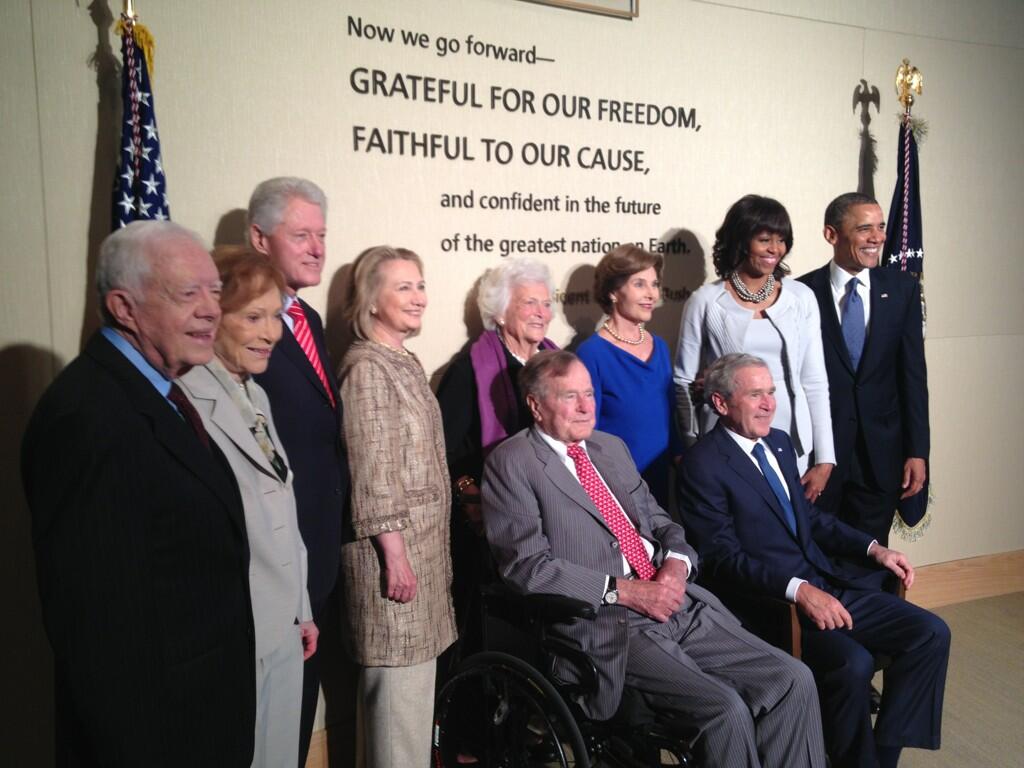
"We had good conversations with our members and made a lot of solid progress. There's still work to do, and with members leaving town for the Bush Library dedication in Texas, we'll continue the conversations after the district work period," said Erica Elliott, a spokeswoman for Majority Whip Kevin McCarthy.
Privately, however, Republicans acknowledged the bill is dead. "Our guys were never going to go for this … it's either full repeal or nothing at all for them," one leadership aide said.
But, as the Repeal Coalition emails make clear, it's not just House leadership that is unhappy with the preoccupation with full repeal of Obamacare.
A number of influential activists, including Independent Women's Forum CEO Heather Higgins, Americans for Tax Reform's Ryan Ellis, and others, vigorously defended Cantor's bill.
Following the bill's defeat, Ellis wrote bluntly, "Now nothing will happen. I'd rather have tried than made the perfect the enemy of the good. Longer term, this makes this entire coalition decidedly unserious and a liability rather than an asset. But don't fret — now we don't have to worry about seven months of a federal risk pool tainting our ideological purity."
But well before the vote, advocates for Cantor's bill were clearly fighting an uphill battle.
Throughout the internal debate, Ellis was one of the bill's most vocal proponents, attacking the logic of the opposition and insisting support of the bill made political sense.
"If you're opposed to this, I hope you were opposed to 1099-MISC repeal. Because the 'improve' logic used here is the same perfect/enemy/good argument that could have been used then," Ellis wrote on April 18 in reference to the repeal of an unpopular tax provision in Obamacare.
"There really isn't a difference. This repeals part of the bill in a particularly-painful way politically [for Democrats], he argued. "It does so in a way that cripples Obamacare's ultimate success. That's exactly what we did with 1099 … This vote is all about political pressure. If the vote were simply to repeal a slush fund, that creates a discomfort level of X for vulnerable House Dems. But to vote to repeal a slush fund AND use the money to get sick = people health insurance? X on steroids. Which version would you rather vote against if you were a Blue Dog?"
That argument sparked a protracted technical debate. On the 19th, Roy, the Cruz staffer, interjected, "I have no idea about all that, but the message sucks. We oppose Obamacare. Period. We will repeal it. Period."
Bill Pascoe, a conservative blogger who seems to have sat out much of the debate, at one point argued that while he agrees Republicans have "wimped out" in the past, "that's one of the reasons I actually LIKE this bill — because at least on this one exercise, we may not have to worry about wimpy Republicans opposing our efforts to save the country from Obamacare."
"I stayed out of it yesterday because, as I've reminded everyone just about every time I've opened my mouth at one of our meetings, I am no health care policy expert. I read everything yesterday very carefully, and weighed all the arguments. It's my POLITICAL judgment that supporting this bill is a s= mart thing to do for those seeking repeal," he wrote the morning of April 19.
After Roy rejected the idea "that we will win the epic fight of our generation by painting in the pastels of D.C. group-think and accepting the premise of the very thing we supposedly seek to kill ... Government interference in health care and markets," Higgins fought back.
"No pastels here: But here I think it helps to see these as two separate fights — one immediate and one long term: right now we have the opportunity to stop $5bb being spent to promote government interference in health care and markets," Higgins wrote. "Stopping that happening strikes me as a good thing and worth doing, and precisely the thing your email below makes clear you want to see happen."
In an April 19 email, Higgins took direct aim at Roy, questioning his insistence that the message must be "we oppose Obamacare. Period."
"Is your view that it is better to find acceptable only demands for full repeal, knowing that won't happen while Obama is president, and knowing that full implantation is rapidly approach long before then?" she wrote.
That drew a strong rebuke from Matt Hoskins, a former top aide to DeMint.
"Is this a serious question? Chip's boss fought to defund Obamacare but a bunch of Republicans wimped out and voted to pass the CR that funds the implementation of this horrible law," Hoskins countered in a terse April 19 email.
Indeed, one of the most intriguing aspects of the emails is the clear alliance between Cruz and those close to DeMint. In addition to Hoskins, former senior aide Ed Corrigan repeatedly bashed the legislation, as did Russ Vought, the political director at Heritage Action.
In one missive, Vought explicitly warned his colleagues that despite their concerns — and reportedly aggressive lobbying from Cantor's office — Heritage Action would come out against the bill.
"The Club will not be alone in this. Heritage Action will oppose as well. We are opposed to federal high risk pools and don't believe Congress should be expanding Obamacare programs, even if it comes from savings within Obamacare," Vought wrote.
"It's also a fake payfor — Obamacare is not an acceptable offset for new spending. Nor does it make sense when House Republicans have not had a full repeal vote or shown any willingness to fight to defund Obamacare on the CR to suddenly go on the offense by fixing Obamacare. We will have more information soon," he added.
One notable group not on the list is the Club for Growth, a major player in conservative politics who not only opposed the bill but also key voted it.
The Club's absence from the discussion was not lost on members of the listserv. When discussion turned toward the Club's opposition to the bill, Campaign for Liberty's Norm Singleton asked, "Is anyone from Club for Growth on this list?"
Higgins explained they had pulled out "because, as [Club spokesman] Barney Keller informed me, 'The people on that listserv gave up on repeal a long time ago.'"
Rep. Cory Gardner, a Colorado Republican, expressed frustration. "I don't understand what the problem is … this is an opportunity for Republicans to follow up on things we said we would do."
"Here's a chance to reduce the deficit [and] support people who are sick … perhaps not everybody is thrilled with this policy," Gardner said. "But it's better than what we have now."